
How heavy should a weighted vest be? Walking and training with the Henkelion vest
How heavy should your weighted vest be? Match the Henkelion vest from 4 to 20 lb to your body weight, then start walking and training in it.
Read the guideLitter box size
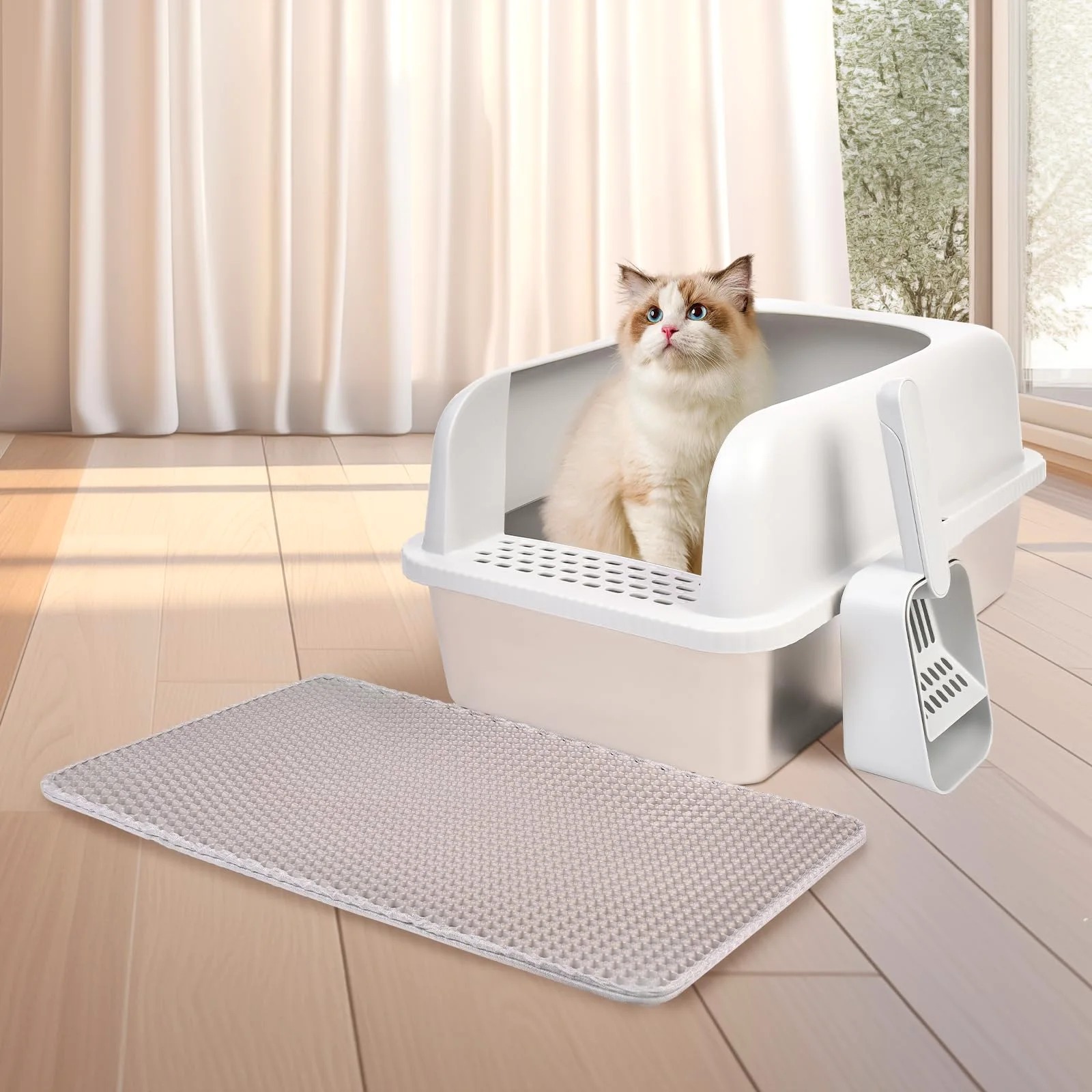
A litter box that is too short, too busy or too dirty is a box a cat may quietly stop using, and the fix often starts with a tape measure. The Henkelion Stainless Steel Cat Litter Box comes in two sizes, S and M. A few measurements of your cat, your rooms and your routine tell you which one belongs in your home and how many of them you need.
International Cat Care gives a simple rule on its page about choosing a litter tray. The ideal tray is one and a half times as long as your cat, measured from the nose to the base of the tail. Many standard trays are too small by that measure, the same page warns, so the rule is worth a minute of your time.
Measuring is easy if the cat cooperates. Wait until your cat stands or stretches out on the floor, lay a soft sewing tape along the spine and read the number where the tail begins. Leave the tail itself out of it. A cat that measures 12 inches calls for a box about 18 inches long, and one that measures 13 inches calls for about 19.5.
Now set those figures against our two boxes. The S measures 17 x 13.3 x 10.2 inches on the outside, so by the one and a half rule it suits a cat up to roughly 11.3 inches from nose to tail base. At 20 x 14.2 x 11.8 inches, the M covers a cat up to about 13.3 inches. Both are outside sizes. Our steel pan sits inside a plastic enclosure, so the floor under your cat's paws is a little shorter than the label. A cat close to the limit belongs in the bigger box.
Shape counts too. International Cat Care recommends rectangular trays because they give more room than corner or oval ones, and both of our boxes are rectangles. A kitten can start in the S, though the same group reminds owners to move a growing kitten up to a bigger tray, and the M is that next step. If you are sizing a carrier at the same time, our size guide keeps the measurements for both side by side.
Both sizes share one design. A stainless steel pan sits inside a high-sided ABS plastic enclosure that clips on, with an overlap at the rim so urine stays in the box instead of running over the edge. Each box comes with a lid, a double-layer litter mat and a scoop with a standing holder. The S adds non-slip stickers, and the M is also sold as a two-pack for homes with more than one cat.
| S | M | |
|---|---|---|
| Outside size (L x W x H) | 17 x 13.3 x 10.2 in | 20 x 14.2 x 11.8 in |
| Volume | about 22 liters | about 26 liters |
| Outside length divided by 1.5 | about 11.3 in | about 13.3 in |
| Litter mat | 11.8 x 11.8 in | 19.7 x 14.2 in |
| Scoop | 9 x 4 in | 13 x 4.7 x 3.3 in |
| Included | steel pan, enclosure, lid, double-layer mat, scoop with holder, non-slip stickers | steel pan, enclosure, lid, double-layer mat, scoop with holder |
| Two-pack | no | yes |
Put the mat at the exit, where paws leave the litter. Your cat crosses it on the way out, and grains that ride along between the toes tend to land on the mat rather than on the floor. On the M the mat runs 19.7 inches, nearly the full 20 inch length of the box, so it covers the whole front of the M. Shake the mat over the trash or the litter bag when you scoop.
The holder stands next to the box with the scoop upright in it. That small detail matters more than it sounds, because nobody scoops twice a day with a scoop stored in a closet down the hall. On the S the scoop is 9 by 4 inches, on the M it grows to 13 by 4.7 inches, a longer reach for a deeper corner.
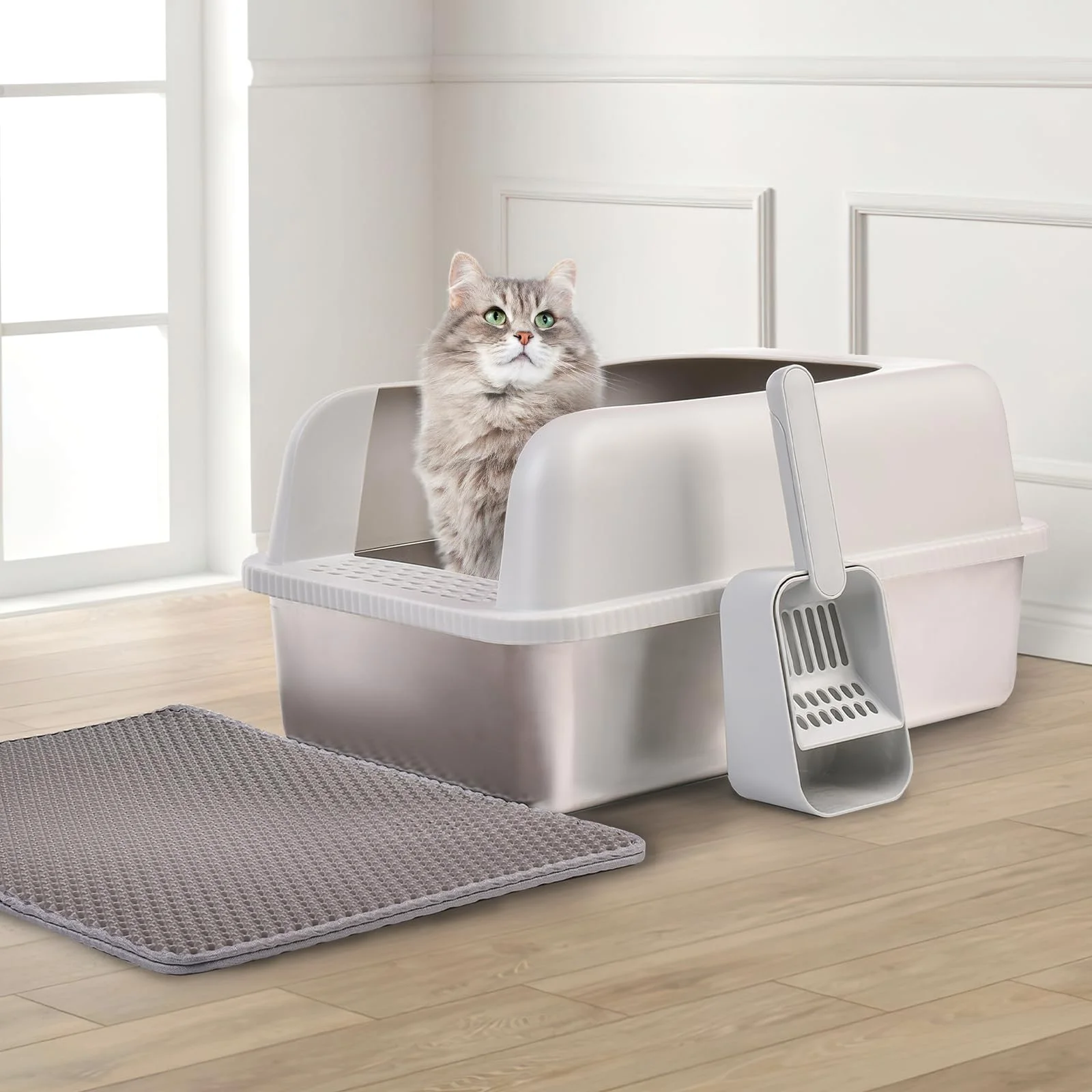

Cat litter box
For big cats, high sprayers and hard diggers.

The Henkelion Stainless Steel Cat Litter Box holds 4.6 stars from 814 ratings, and the product page lists both sizes and the M two-pack.
Plan on one more box than you have cats. ASPCA puts it plainly on its page about litter box problems: one for each cat, plus one extra, so three cats need at least four boxes. International Cat Care says the same on its page about soiling indoors, where a single cat needs access to two trays and two cats need three.
| Cats in the home | Boxes recommended | Who says so |
|---|---|---|
| 1 | 2 | International Cat Care |
| 2 | 3 | International Cat Care |
| 3 | at least 4 | ASPCA |
That spare box surprises people who live with one cat. International Cat Care gives the reasons: cats dislike soiled litter, they can compete over trays, and some like to urinate in one spot and defecate in another. A second box gives your cat a clean choice when the first one is used.
Spacing counts as much as the number. Both groups advise spreading boxes around the home instead of lining them up in one room, since one cat can guard a corner and block the others from every box in it. Four boxes side by side in the laundry room work, for a shy cat, like a single box.
Height counts as well. ASPCA notes that in a home with more than one floor you may need a box on each level. For a single cat in a two-story house, the M two-pack covers both floors, or you can pair an S upstairs with an M downstairs if one room is tight.
A good spot is quiet but not a trap. International Cat Care wants the tray away from food and water and away from busy parts of the home. Its tray page also notes that cats are often reluctant to use a tray near a cat flap or a full-length glass window, where they may sense a threat from outside.
ASPCA lists the places to skip: next to the washer and dryer, beside the dog's food and water bowls, or anywhere with a lot of foot traffic. Cats, it says, like to see people or other animals coming and like more than one way out. That fits with the International Cat Care advice to choose a quiet corner where your cat only has to watch in one or two directions. The back of a room works, as long as nothing can walk up behind the box and the cat still has a clear path to leave.
Think about your own floor plan. A hallway outside a bedroom door sees traffic every morning, and a corner of the living room behind the sofa may be calmer than it looks. Keep the food bowl in another room entirely, since both groups note that cats avoid toileting close to where they eat.
Measure the spot as well as the cat. The M needs a floor space of 20 by 14.2 inches, plus room in front for the 19.7 x 14.2 inch mat. With the scoop holder standing at the side, plan for a few extra inches of width. The S fits a smaller footprint of 17 by 13.3 inches with an 11.8 inch square mat, which can make the difference in a small bathroom or a closet with the door removed.
Our enclosure is high-sided for a practical reason. Cats dig and kick, and the tall walls plus the overlap at the rim keep litter and urine inside the box. With an adult cat that digs hard, the floor around it stays cleaner.
Mobility changes the picture. ASPCA writes that older or arthritic cats, and very young ones, can struggle with boxes that have high sides or a top opening, and suggests switching to low sides for them. International Cat Care says the same about cats with arthritis or reduced mobility. Watch a senior cat at the edge. Hesitating, stepping in slowly or going just outside the box are signs the walls may be too much, and a lower box is the kinder choice.
Lids divide cats. ASPCA states that most cats don't like lids or liners on their boxes. International Cat Care takes a gentler line: many cats adapt to a covered tray, but some feel vulnerable in a small space with one exit, and large cats may not have room to turn and dig. It adds that a cover keeps smells in for people while making soiled litter easier to miss, and a tray that smells bad is one a cat is less likely to use.
So start with the box open. Leave the lid off for the first weeks and watch how your cat uses it. If everything goes smoothly, try the lid and see whether the habits stay the same. Skip plastic liners either way: ASPCA advises against them, and International Cat Care notes that claws catching in polythene can put a cat off the tray.
Less litter than you might expect. ASPCA says most cats like a shallow bed and suggests one to two inches rather than three to four. International Cat Care cites research showing cats prefer about 3 cm, a little over an inch. Its house-soiling page treats 3 cm as a minimum that can go up or down with the cat's size and preference, and notes that some cats like deeper litter to defecate in.
The volume figures for our boxes, about 22 liters for the S and about 26 for the M, describe the space inside the box, not how much litter to pour. Filling a pan to the brim wastes litter and gives the cat a deep, shifting surface it may not like. Pour until you have an even layer of roughly one and a half to two inches, then smooth it with the scoop.
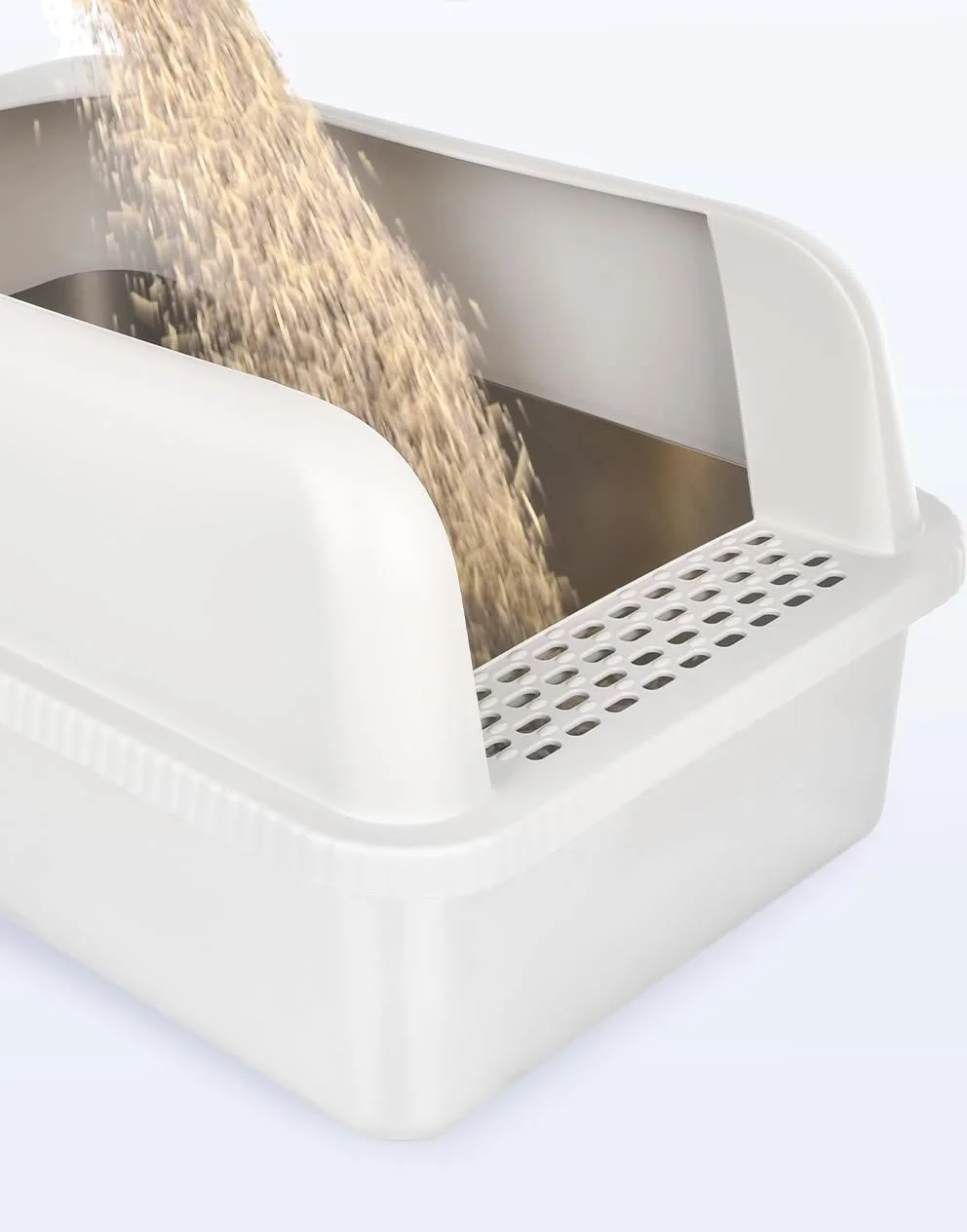
Type of litter matters as much as depth. ASPCA reports that cats generally prefer unscented clumping litter with a medium to fine texture. International Cat Care points to a fine, sand-like litter and notes that clumping litter is easier to remove, which keeps the tray more inviting. Both groups favor unscented litter, and International Cat Care adds that scented litter and deodorants can overpower a cat's sensitive nose.
If you want to switch litter, go slowly. International Cat Care suggests mixing a new litter into the old one gradually over a week, or setting out a second tray with the new litter beside the first and letting your cat choose.
Scooping comes first. ASPCA asks you to scoop at least once a day, while International Cat Care asks for at least twice a day, with fresh litter topped up after the clumps come out. The scoop in its holder makes the twice-a-day version realistic: lift out the clumps, tip them into a bag, put the scoop back upright.
Full washes are where the two groups differ in detail. ASPCA says to rinse the box completely once a week and replace all the litter. International Cat Care's house-soiling page also says at least weekly, while its tray page allows every two to four weeks with clumping litter and weekly with non-clumping litter. If your cat is fussy, weekly is the safer rhythm.
Washing our box goes like this. Unclip the plastic enclosure, lift out the steel pan and empty the old litter into a bag. Rinse the pan in a utility sink, a tub or outside with a hose. ASPCA suggests warm water with unscented soap, baking soda or no soap at all. International Cat Care recommends hot water and biological detergent and asks you to avoid heavily scented products.
One warning from International Cat Care deserves a place on your cleaning shelf. Some disinfectants that turn cloudy in water, such as those based on chloroxylenol, are toxic to cats. ASPCA adds that ammonia-based cleaners are a poor choice for accidents, because urine contains ammonia and the smell can draw your cat back to the spot.
Stainless steel makes the routine quicker. The pan is non-porous and wipes clean, so a soft cloth and warm water lift what the scoop missed. Rinse well, dry the pan with a towel, clip the enclosure back on and pour a fresh layer of litter.
Even a well-kept box can be refused. ASPCA reports that at least 10% of cats develop elimination problems. Its first step is a visit to the veterinarian, because medical problems can look like a dislike of the box. A cat that goes in often and passes only small amounts of urine may have a urinary tract infection, for example, and needs a vet.
That trip goes better in a carrier your cat already knows. The Henkelion Soft-Sided Pet Carrier comes in two sizes. Its Medium measures 17 x 11 x 11 inches, for cats whose body fits within 15 x 9 x 9 inches and who weigh up to 15 pounds. A Large of 20 x 13 x 13 inches takes pets within 18 x 12 x 12 inches and up to 25 pounds. Measure your cat's length and height before choosing, not just the weight.

Pet carrier
For the vet, the car and cabin flights.
Leave the carrier open in a room your cat likes for a few days before the appointment, so it reads as furniture rather than a warning.
Once health problems are ruled out, the box itself is the next place to look. The AAFP and ISFM guidelines on house-soiling name optimizing the litter box as one of two universal steps for every case. In practice you go back over the basics. Compare the box with your cat's length, count one box per cat plus one, and find a quiet spot with a way out. Then keep a shallow layer of unscented litter in a clean pan.
Punishment does not belong on the list. ASPCA tells owners never to rub a cat's nose in urine or scold it, and International Cat Care says punishment only makes a cat fearful and the problem worse. Everything else for the litter corner, from the steel box to the carrier, sits on our pet supplies shelf.
Keep reading

How heavy should your weighted vest be? Match the Henkelion vest from 4 to 20 lb to your body weight, then start walking and training in it.
Read the guide
Pick 2, 3, 5 or 10 lb Henkelion ankle weights, use them for leg lifts and glute work at home, and see why walking or running in them is another matter.
Read the guide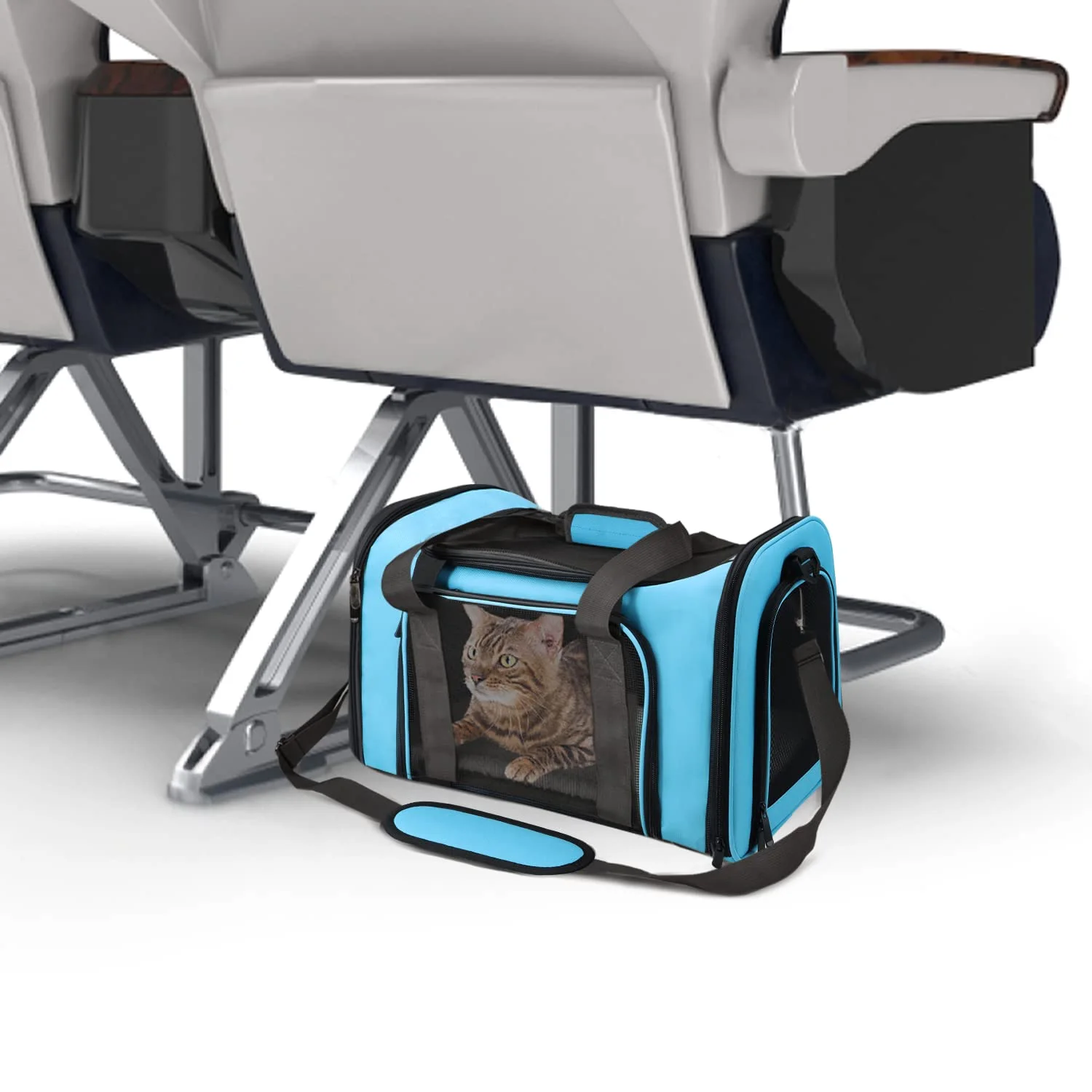
Medium or Large? Measure your cat or small dog, compare Delta, American and Alaska cabin carrier limits, and plan car rides and vet visits with Henkelion.
Read the guide