
Ankle weights at home: how heavy to go and how to use the Henkelion cuffs
Pick 2, 3, 5 or 10 lb Henkelion ankle weights, use them for leg lifts and glute work at home, and see why walking or running in them is another matter.
Read the guideWeighted vest weight

The question sounds personal, but the answer starts on a bathroom scale. Dr. Jessica Tomazic, a sports medicine specialist at Cleveland Clinic, points to research that favors a vest weighing 5 to 10 percent of your body weight (Cleveland Clinic). Her warning about going heavier is just as plain: more than that "doesn't appear to offer much benefit" and can raise the risk of injury. Harvard Health arrives at a similar ceiling from a physical therapist, who says a vest should not exceed 10 percent of body weight, or 15 pounds for a 150-pound person (Harvard Health). A second Harvard Health answer suggests staying near 10 percent, at least for starters (Harvard Health).
So do the arithmetic before you pick a color. At 140 pounds your window runs from 7 to 14 pounds. For someone at 200 pounds it runs from 10 to 20.
With the Henkelion Weighted Vest this decision matters more than usual, because the weight is fixed. We fill the vest with iron pellets and metal rock, held in pockets at the front and the back, and none of it comes out. You choose 4, 6, 8, 12, 16 or 20 lb when you order, and that is the vest you wear on every walk. There are no inserts to count, lose or forget on the kitchen counter.
The flip side is real too. When your first vest starts to feel light, the next step up is a second vest rather than a handful of extra plates. That is why the first choice should sit inside your window with room to grow, not at its top edge. A 160-pound walker who starts with the 8 lb vest still has the 12 and 16 lb vests ahead, both within the range Cleveland Clinic describes. Starting at 16 lb leaves nowhere to go except past the guidance.
Run Cleveland Clinic's range and Harvard Health's ceiling against each of our weights and you get a simple map. The two middle columns are plain arithmetic from that guidance, 5 to 10 percent and a 10 percent cap. In the last column sits our own suggestion for where each vest makes sense as a starting point.
| Henkelion vest | Body weight where it equals 10% (Harvard Health ceiling) | Body weights where it falls in the 5 to 10% range (Cleveland Clinic) | A sensible starting use |
|---|---|---|---|
| 4 lb | 40 lb | 40 to 80 lb | Under 5% for any adult over 80 lb, so a light way to learn the fit on short walks |
| 6 lb | 60 lb | 60 to 120 lb | A first walking vest for a lighter adult near 120 lb, where it sits at 5% |
| 8 lb | 80 lb | 80 to 160 lb | A low first step near 160 lb, the middle of the range near 110 lb |
| 12 lb | 120 lb | 120 to 240 lb | A first vest near 240 lb, already the 10% ceiling at 120 lb |
| 16 lb | 160 lb | 160 to 320 lb | Usually a second vest after weeks in a lighter one, or a first vest near 320 lb |
| 20 lb | 200 lb | 200 to 400 lb | The top of our range, past the 10% ceiling for anyone under 200 lb |
Find your own weight in the third column and look for the lightest vest whose range includes you. Starting near 5 percent rather than 10 gives you the slack that the American Council on Exercise recommends for beginners. Its trainer article on weighted-vest walking notes that people new to exercise may drop out when intensity climbs too fast in the first four to six weeks, so intensity should rise gradually (ACE).
Two worked examples make the map concrete. Take a walker at 180 pounds: 5 percent is 9 pounds and 10 percent is 18, so the 12 lb and 16 lb vests sit inside the window and the 8 lb sits just under it. Starting at 12 leaves the 16 for later. Someone at 115 pounds has a window of about 6 to 11.5 pounds. For that reader the 6 lb and 8 lb vests fit, while the 12 lb already goes a little past Harvard Health's 10 percent.
Colors follow the weight. The 8 lb and 12 lb vests come in black, gray and blue, and the 12 lb adds pink and purple. If two of you walk together and land in the same window, the 6, 8 and 12 lb black vests also come as two-packs.

Weighted vest
For weighted walks, stairs and home workouts.

A vest of the right weight can still feel wrong if it sits badly. Cleveland Clinic's first piece of advice before weight is fit: the vest should sit securely and be made of a breathable material. Harvard Health describes the usual design as one that hangs from the shoulders, with a wide strap around your middle to hold it in place.
Ours follows that pattern. The pockets of pellets sit at the front and at the back, so your chest and your back share the load instead of one side dragging. Soft neoprene makes up the body of the vest. The adjustable strap closes around your middle, and here is the one detail we always repeat: the elastic part of the strap belongs at your waist. Set the strap so that stretch sits over your waist, then pull it snug enough that nothing slides when you move.
Try it indoors first. Walk the length of your hallway, take a flight of stairs down and back up, and bend to tie a shoe. If the front pocket bounces against your ribs or the back pocket swings, tighten the strap a little and try the stairs again. A vest that shifts on the third step will shift for the whole mile.
Two smaller features earn their place once you are outside. A mesh pocket on the back holds your phone or keys, which leaves your hands free for a railing or a dog leash. Reflective strips run across the vest, and you can see them in our photos of night runs. They catch headlights at dusk, yet they do not replace a light of your own on a dark road.
If you are fitting the vest for someone else, the same check works. Let them walk the stairs while you watch from below. Your eye will catch a sliding pocket faster than they will feel it.
Begin with the walks you already take. The Physical Activity Guidelines for Americans ask adults for 150 to 300 minutes a week of moderate aerobic activity, with brisk walking as their own example (health.gov). The second edition also dropped the old rule that only 10-minute bouts counted, and the same page says any amount of activity has some health benefits. A short loop around the block in your new vest is part of your week, not a warm-up for it.
The ACE study gives a useful model for pace. Its researchers walked untrained women at 2.5 miles per hour, a speed chosen because it is usually comfortable for people who are not fit. Every workout they suggest opens with a 5 to 10 minute warm-up at a speed of your choosing on flat ground.
For your first week, keep the route flat and the walks short. Put the vest on for the second half of a familiar walk rather than the whole thing, and notice your shoulders and lower back that evening. In the second week, wear it for the full walk. After that, lengthen the walk before you think about anything heavier. Ten more minutes in the same vest is a gentler step than four more pounds.
Watch for the signs that tell you to slow down. A vest that leaves red marks at the shoulders is too loose at the waist or too heavy. Pain in a knee, a hip or your back on the day after a walk is a reason to drop back to shorter walks or take the vest off for a few days. ACE frames the first four to six weeks as the period when intensity should climb slowly, and that pace fits a vest that only comes in one weight per order.
Running can come later. Cleveland Clinic's specialist names walking and running as two safe ways to start with a vest, but walking first gives your body time to get used to the load before your feet start landing harder.
Sooner or later the 8 lb vest that felt heavy in week one feels like a jacket. Before you order the 12 lb, look at what the ACE research found about hills.
In that study, 13 untrained women walked at 2.5 miles per hour in no vest, a vest at 10 percent of body weight, and a vest at 15 percent. On flat ground, the 10 percent vest did not raise oxygen use enough to count as a significant change. It took the 15 percent vest to do that, and then calories burned rose by about 12 percent over walking without one. On a 5 or 10 percent incline, the picture flipped. The 10 percent vest raised calories burned by 13 percent, and the 15 percent vest added no significant benefit on top.
Note what this means in practice. The 15 percent figure sits above the ceiling that both Cleveland Clinic and Harvard Health describe, so we would rather you reach for a hill than for a heavier vest. A route with a long grade, a parking garage ramp or a stairwell does more for your walk at 10 percent than flat ground does at 15.
ACE also suggests interval walks with a vest at 10 percent of body weight: two minutes on a 10 or 15 percent grade, then four minutes on the flat, repeated for 20 to 30 minutes. Outdoors, that might look like a steep block followed by two flat ones. The same article asks beginners to stay below a 15 percent treadmill grade in the early weeks.
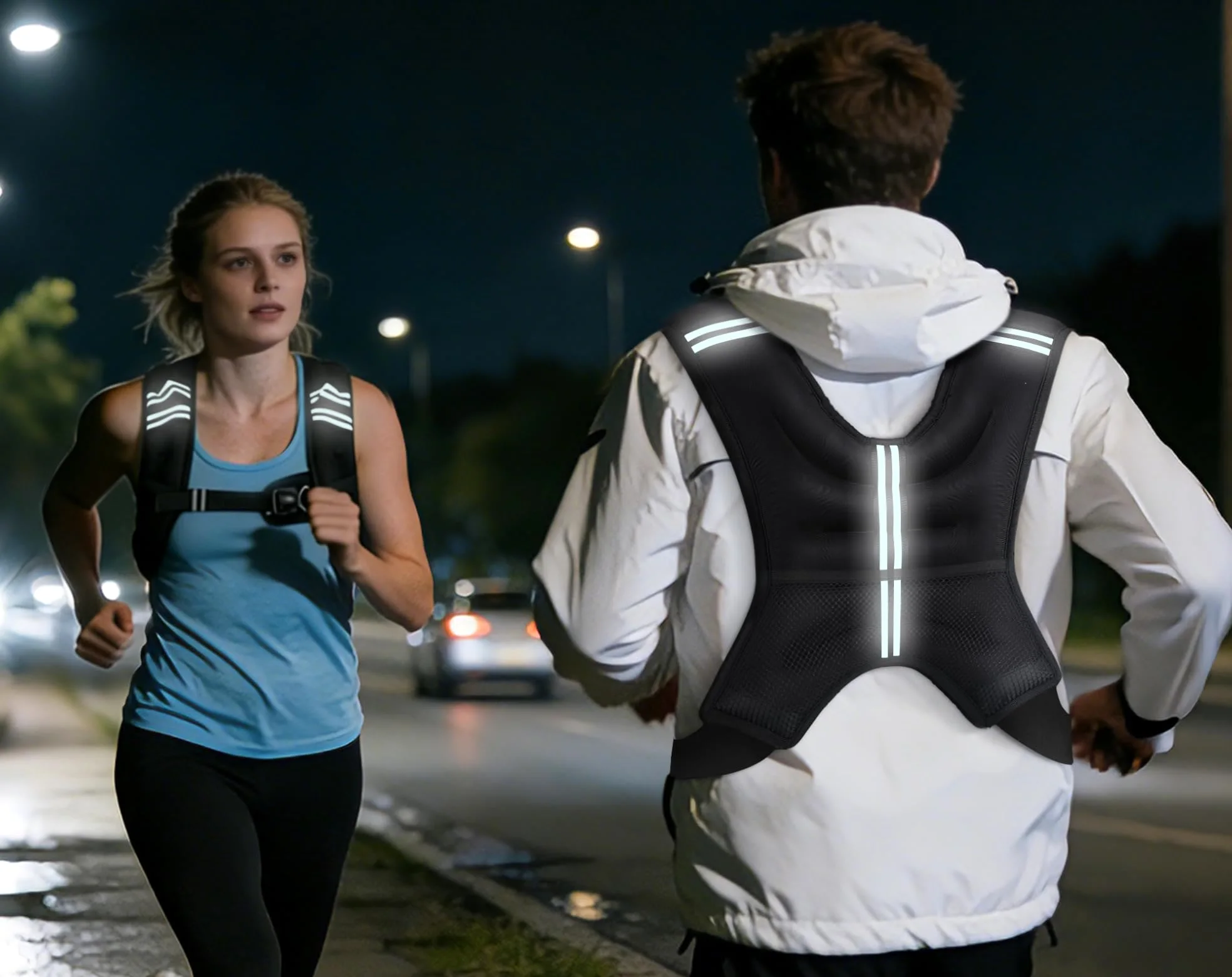
When hills and longer walks both feel easy, that is the time for the next weight in our table, as long as it stays inside your 5 to 10 percent window. Some activities call for more caution than others. Cleveland Clinic's specialist warns that a vest can throw off your balance on a bike or in anything fast, especially if you are new to it.
Walking covers the aerobic half of the federal guidelines. The other half is muscle-strengthening activity, like lifting weights or doing push-ups, on at least 2 days each week. A vest helps here only when you add the strength work yourself. Cleveland Clinic's specialist says it plainly: a vest on its own won't build strength, though combined with strength training it can help.
On those two days, the vest you already own can come indoors. Body-weight moves you know, such as step-ups on the bottom stair or slow sit-to-stands from a kitchen chair, carry the same pounds you carry on your walks. Keep the strap at the waist exactly as you set it outside, and stop if the vest shifts when you bend.
Ankle weights belong to a different job. Harvard Health quotes a physical therapist who advises against wearing them on a walk or in an aerobics class. She explains that they pull on the ankle joint and work the front of the thigh more than the back. The same therapist calls them helpful for exercises that target the leg and hip, like side-lying leg lifts. So leave your ankles bare on the road and strap the weights on for the floor work afterward.
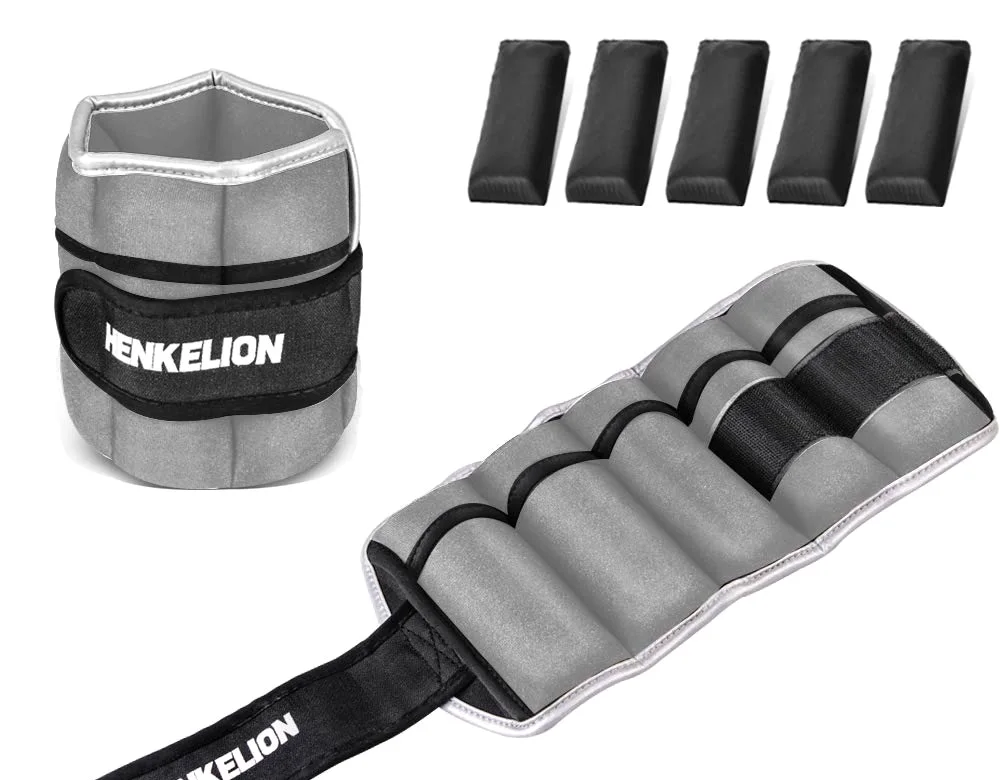
Ankle weights
For leg lifts, glute work and wrist weights at home.
The Henkelion Adjustable Ankle Weights come as a pair, from 2 lb on each ankle up to 10 lb each. Each pair holds ten removable weight bags, five per cuff, so you can take bags out and start lighter than the label. The hook-and-loop strap and the long shape let the cuff close around a wrist as well. Harvard Health's therapist notes wrist weights suit arm exercises for people who find it hard to grip a dumbbell, and like ankle weights she would keep them off a walk. You can see both pieces, and the rest of our weights, on the Henkelion weights shelf.
Most readers can start walking in a vest right away. Some should ask a clinician first, and the sources are specific about who.
The ACE article tells trainers to speak with a client's physician before adding a vest at all. It names conditions where a weighted vest would be contraindicated, including arthritis, severe osteoporosis and chronic obstructive pulmonary disease. Harvard Health adds neck and back pain to the list, and its physical therapist explains why: the vest puts pressure on the spine. If you have spinal stenosis or significant disc degeneration, she warns it can cause problems up to the neck. The same Harvard Health answer says not to wear a weighted vest during pregnancy.
Cleveland Clinic's specialist covers a wider group. If you have had an injury before, her advice is to check with your physician before trying a vest. That includes an old knee or ankle problem that feels settled, since a vest adds load to every step those joints take.
None of this is a reason to skip activity. The first key guideline for adults is to move more and sit less, and plain walking without a vest counts in full. A vest is one way to make a walk harder, and hills are another. For many people, a slower start with no added weight at all is the right first month.
Once you have the go-ahead, the order is simple. Weigh yourself, find your window in the table, and choose the lightest vest that falls inside it. Fit the strap with the elastic at your waist, walk your hallway and your stairs, then take it outside on a flat route you know well. The Henkelion Weighted Vest page lists every weight and color, so you can match the vest to your number before you order.
Keep reading

Pick 2, 3, 5 or 10 lb Henkelion ankle weights, use them for leg lifts and glute work at home, and see why walking or running in them is another matter.
Read the guide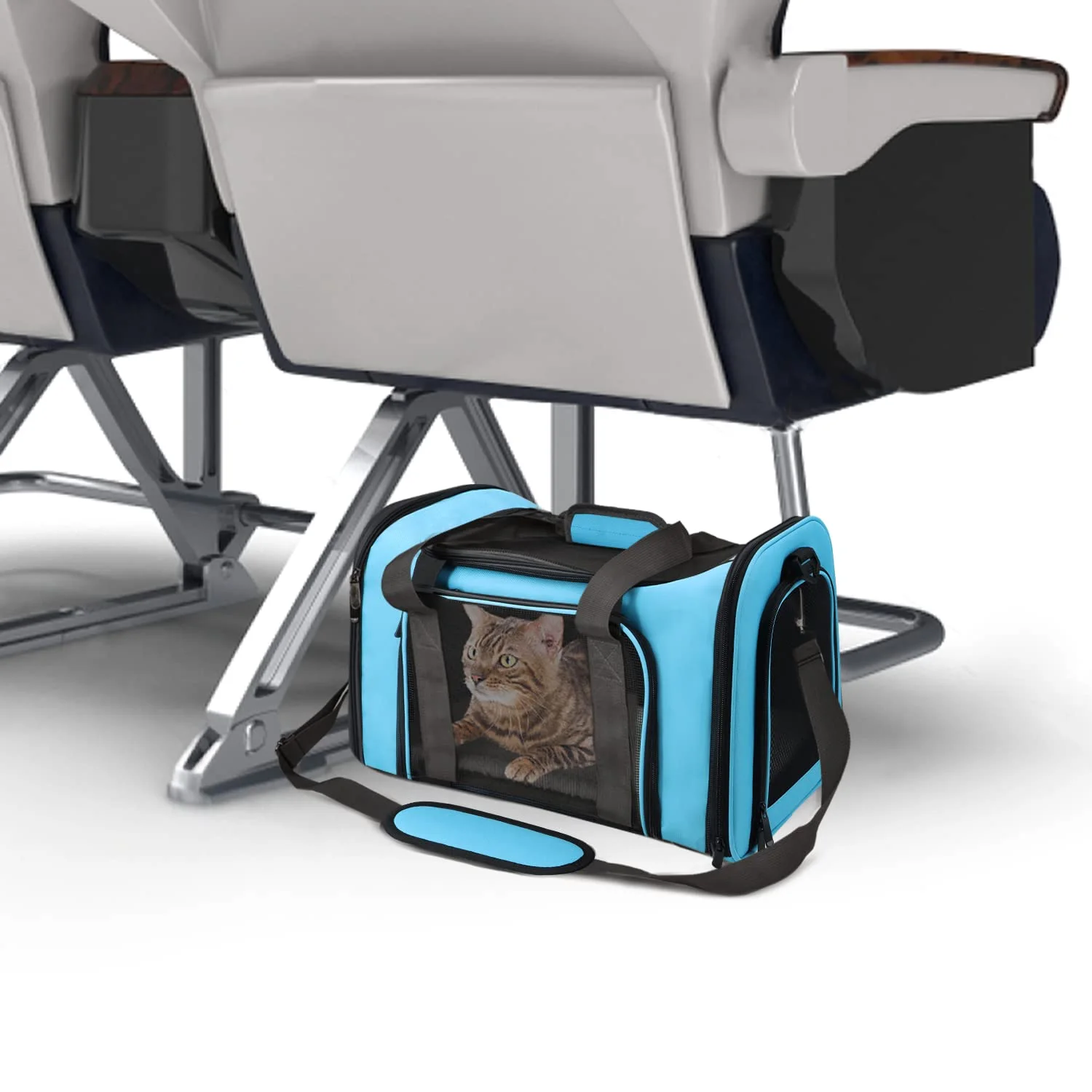
Medium or Large? Measure your cat or small dog, compare Delta, American and Alaska cabin carrier limits, and plan car rides and vet visits with Henkelion.
Read the guide
How big a litter box your cat needs, how many boxes for how many cats, where to put them, how deep the litter goes and how to wash a steel pan.
Read the guide